Bernhard's Vienna Guide Book
A personal guide to the city I was born in.
Vienna is my hometown, the city I was born in. I always had a love-hate relationship with Vienna. On the one hand, it is, rightfully so, regularly awarded the title of most livable city in the world. Its history, ease of living, well-functioning systems, and art make it an amazing city. And then there is the feeling that the Viennese still think that they are living in the metropolis of a world empire. This empire is long gone, but the Viennese love to hold on to it. I miss the innovation, wildness, and challenges to the city.
This is my personal guide to Vienna. Enjoy it!
A Day for Gustav Klimt and Jugendstil
Start your day at the Museumsquartier and visit the Leopold Museum - https://www.google.com/maps/search/?api=1&query=Leopold+Museum+Wien. The museum opens at 10 am and is closed on Tuesdays (except in July and August). It houses main works by Egon Schiele, Oskar Kokoschka and some Gustav Klimt. It will give you an introduction into the Austrian Jugendstil.
To get even deeper into Egon Schiele, his works and thinking, listen a bit to the music by Arnold Schönberg, atonal music from the same period. Here is the String Quartet No. 3: https://youtu.be/K_0W5MIQrT0.
Stroll through the Museumsquartier over to the Secession - https://www.google.com/maps/search/?api=1&query=Wiener+Secession. When you leave the Leopold Museum turn right still within the Museumsquartier with all its courtyards. Stroll through the courtyards and exit at Mariahilferstrasse. Slightly left across from where you exit you can walk down a staircase - Rahlgasse, and walk your way through the courtyards of the TU (Technical University) and then turn left where you will see the Secession.
The Secession was built by artists around Klimt, Schiele and others protesting against the conservative art of their fellow artists and feeling that they deserve their own exhibition building. The building itself is magnificent Jugendstil. A real jewel inside and outside. See the exhibitions inside but more for the halls and the architecture than - probably - the exhibited art.
In the basement of the Secession is Gustav Klimt's Beethoven Fries. It is a unique work by Klimt and you will need time to take it all in. Listen to the last movement of Ludwig van Beethoven's Symphony No. 9 there, "Ode to Joy". Klimt used this text by Friedrich Schiller and Beethoven's music as an inspiration and guide for this work: https://youtu.be/yoH_h6yxgiI?t=50m3s
After that visit, you might want to take a break. A two-minute walk from the Secession is Café Museum (Operngasse 7 - https://www.google.com/maps/search/?api=1&query=Café+Museum+Wien), designed by Adolf Loos in 1899 and a living room of Elias Canetti, the Nobel laureate whose memoir trilogy - some of my favorite books - captures Vienna in the 1920s and 30s. After a bite there, cross over to Karlsplatz and stroll through the park. Do not forget to visit the old underground station - another Jugendstil jewel - designed by Otto Wagner (https://www.google.com/maps/search/?api=1&query=Otto+Wagner+Pavillon+Karlsplatz+Wien). Enjoy the little lake in front of the Karlskirche (https://www.google.com/maps/search/?api=1&query=Karlskirche+Wien). You might want to take the tram at Gusshausstrasse (https://www.google.com/maps/search/?api=1&query=Gußhausstraße+Wien) for 2 stops in the direction of Hauptbahnhof. Get out at the stop Schloss Belvedere and enter the Schloss - https://www.google.com/maps/search/?api=1&query=Schloss+Belvedere+Wien.
The Schloss Belvedere was actually just the summer house of Prinz Eugen and within walking distance of his magnificent city palace. It houses today one of the most important collections of Klimt paintings, among them the famous Kiss. Go for the Klimt Gallery right away and spend time looking at his unbelievable paintings. While looking at that painting I suggest listening to the Adagietto of Gustav Mahler's 5th Symphony: https://youtu.be/15WQNKhaCHY. Again music from the same area expressing similar emotions in different art forms.
After that visit enjoy the view over Vienna and stroll down through the park back to the city.
The Imperial Vienna
If there is time - and the weather is not too bad - a visit to the Schönbrunn Palace (https://www.google.com/maps/search/?api=1&query=Schloss+Schönbrunn+Wien) is a must. It is just a short underground ride away - U4 to Schloss Schönbrunn. Schönbrunn was the summer palace of the Austrian emperors. Taking a tour through the state rooms is always worth your while.
If you are still in an imperial mood, visit the Hofburg Palace (https://www.google.com/maps/search/?api=1&query=Hofburg+Wien) which was the winter residence of the imperial family and still houses the offices of the Austrian president.
The Hofburg Palace also houses the Spanish Riding School (www.srs.at) with the famous white stallions. Their Morning Exercise - the stallions training to classical music - runs on selected mornings and starts at 10 am, with a summer break (roughly late June to early August). Book online in advance at www.srs.at, as it often sells out; any remaining tickets are sold at the box office on Michaelerplatz (https://www.google.com/maps/search/?api=1&query=Spanische+Hofreitschule+Michaelerplatz+Wien). It is worth combining with a guided tour of the building.
Other Museums
You should not miss the Bruegels at the Kunsthistorische Museum - https://www.google.com/maps/search/?api=1&query=Kunsthistorisches+Museum+Wien - some of the most fascinating art of the 16th century.
Third Man Tour
This tour follows the footsteps of Orson Welles into the Vienna sewer system. Based on the novel by Graham Greene it was one of the most admired films in the late 40ies. It runs seasonally, May to October, Thursday to Sunday, every hour from 10 am to 8 pm. The 3 pm tour is in English; all others are in German. It is popular, so reserve ahead online or by phone (+43 1 4000-3033) and collect your tickets at the counter in the Girardipark, opposite Café Museum (https://www.google.com/maps/search/?api=1&query=Third+Man+Tour+Girardipark+Wien). Booking and details: https://www.drittemanntour.at/en/ticket-info. You might want to read the novel before: http://a.co/cNYdMh3. And here is a clip to the trailer: https://youtu.be/5VvXKm2deh0.
Heuriger
Heurige are the typical wine places in Vienna. Yes, we grow wine in Vienna! Vienna has some decent white wines - Gemischter Satz is one to try. The Heurige are on the outskirts of Vienna. There you can taste the wine and also enjoy some typical food.
One of the oldest Heurigen dating back to 1711 and still owned by the same family is Schübel-Auer. You can easily reach it from the city center with the Tram D - https://www.google.com/maps/search/?api=1&query=Heuriger+Schübel-Auer+Wien
If you have more time and the weather is nice, do go on the Nussberg! That's a wonderful walk with several Heurigen on top. You have a great view over Vienna from there. The last stop of the Tram D gets you close to it. Then it is 30' to 60' walk depending on the route you take. My favorite Heuriger on Nussberg is Wieninger. Again, it is a very good Vienna winemaker. https://www.google.com/maps/search/?api=1&query=Wieninger+am+Nussberg+Wien
Coffee Houses
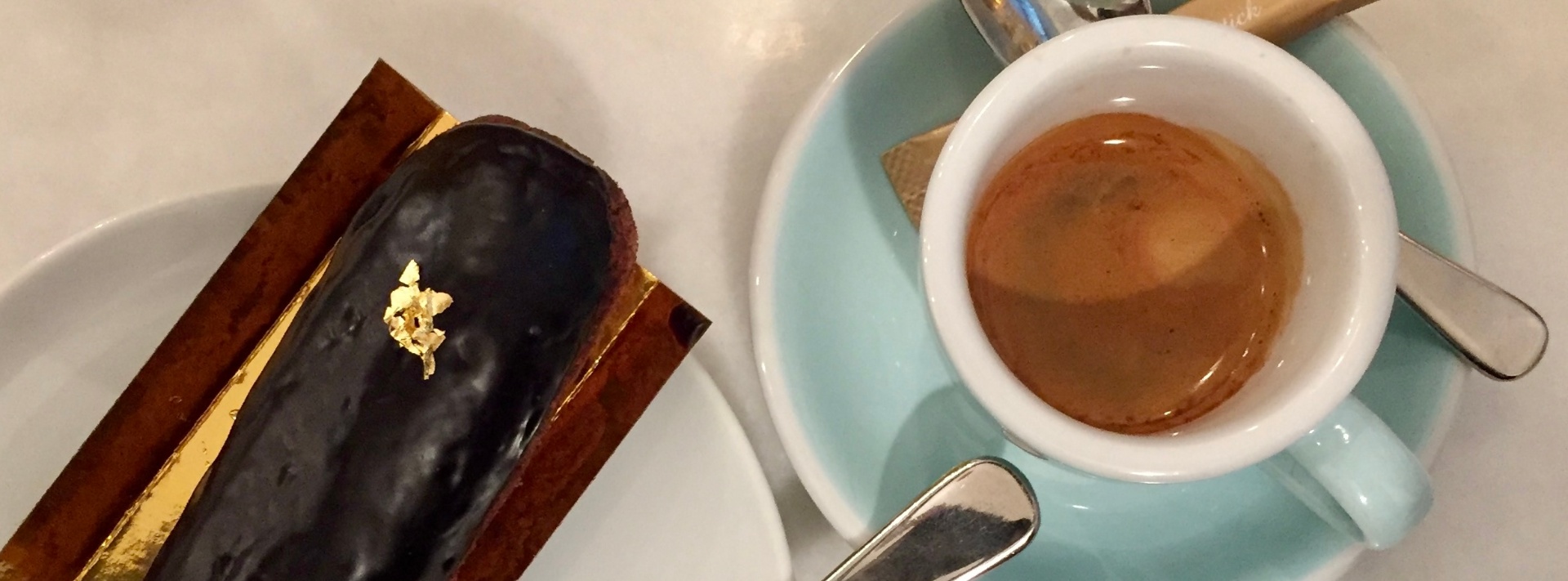
Vienna is famous for its coffee houses - not its coffee, though. The coffee houses were the meeting points of artists, intellectuals, and others at the beginning of the 20th century. They are often called the extended living rooms of the Viennese. Some haven't really changed. Don't worry that the waiters are grumpy and unfriendly. That's just part of the culture. And until you have been going there for years, that will not change. Besides coffee and cake, they all serve lunch, dinner, and other snacks. Some of the typical ones I can recommend:
Café Schwarzenberg - https://www.google.com/maps/search/?api=1&query=Café+Schwarzenberg+Wien - yes, that's the place they know me by name as it was between my old apartment and the Konzerthaus. Also, still very typical.
Café Landtmann - https://www.google.com/maps/search/?api=1&query=Café+Landtmann+Wien - it is the more elegant and pricier of the many cafes in Vienna. But it is where politicians meet lobbyists and business people.
Restaurants
Vienna is full with restaurants. Here are some of my favorites:
Gmoa Keller ($) is a very traditional old Austrian restaurant. The Viennese like to go there. It is at the back side of the Wiener Konzerthaus: https://www.google.com/maps/search/?api=1&query=Gmoakeller+Wien
Gasthaus Pöschl ($$) is also a very traditional Viennese restaurant right in the center of Vienna. https://www.google.com/maps/search/?api=1&query=Gasthaus+Pöschl+Wien
Lara ($$) is my favorite vegan place, the relaxed all-day sister of Michelin-starred Jola. Breakfast to dinner, à la carte, no fake-meat gimmicks. Passauerplatz 2, 1010 - https://www.google.com/maps/search/?api=1&query=Lara+Restaurant+Passauerplatz+Wien
Plachutta ($$$) is famous for its boiled beef ("Tafelspitz"). If you did not have it, you need to taste it. Plachutta is most famous for it but you can also get it in other places: https://www.google.com/maps/search/?api=1&query=Plachutta+Wollzeile+Wien